
Système de traitement des plaies par pression négative (TPPN) à usage unique PICO◊
Simplifier les soins – TPPN
Entièrement portatif et efficace sur le plan clinique dans le traitement des plaies chirurgicales, chroniques et aiguës.
Doté de la technologie exclusive AIRLOCK◊, le système de traitement des plaies par pression négative (TPPN) PICO a démontré son efficacité clinique dans le traitement des incisions chirurgicales fermées et des plaies difficiles à cicatriser, avec des caractéristiques axées sur le patient et la capacité de traiter deux incisions avec un seul dispositif (selon le système choisi).*1-10
Produits vedettes
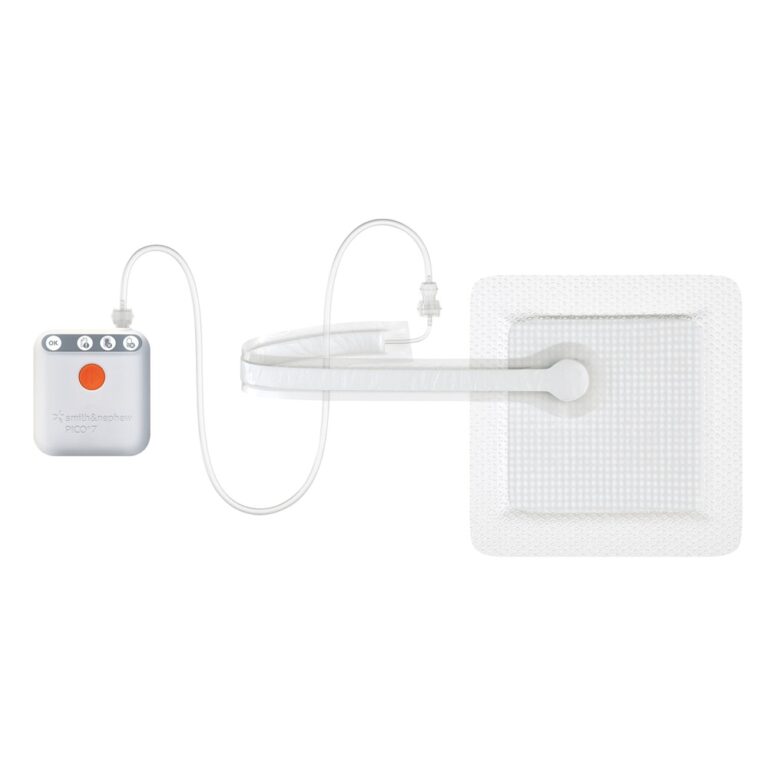
PICO◊ 7
Jusqu’à 7 jours de TPPN constant grâce à la technologie exclusive AIRLOCK◊ – idéal pour les hôpitaux ou les soins à domicile
1-6, 21
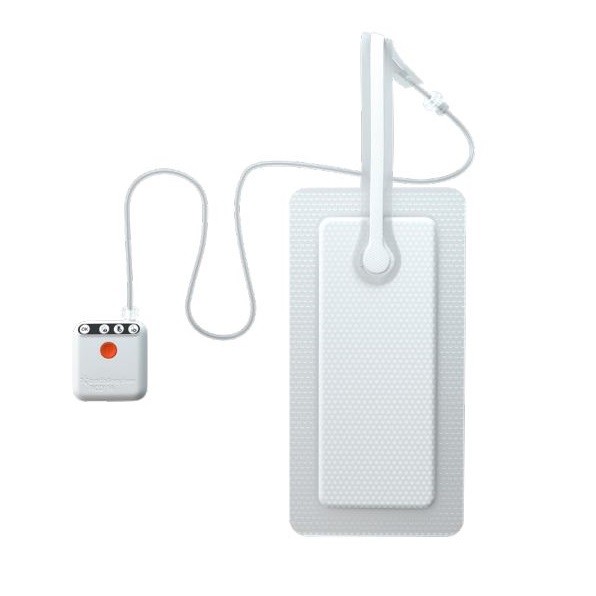
PICO◊ 14
En raison de sa pompe améliorée, le système peut être utilisé pendant un maximum de 14 jours, avec un minimum d’intervention.4, 22, 23 Idéal pour les incisions complexes et les patients à risque ayant subi une intervention chirurgicale.
Ressources pour l’application
Brochure d’information pour le patient

Guide d’application de PICO™ 7 – incisions refermées
Guide de référence rapide

PICO 14 Guide du patient
Données cliniques probantes
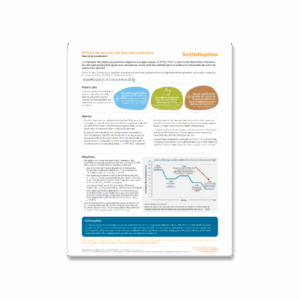
La therapie des plaies par pression negative a usage unique (uTPPN) PICO. a permis de reduire les infections du site operatoire (ISO)
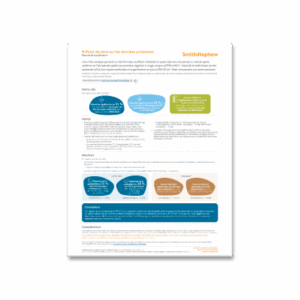
PICO. reduisait les infections du site operatoire (ISO) tous types confondus et superficielles et que le PREVENA™ etait comparable aux soins standard

Sélection des niveaux de pression négative thérapeutiques pour les soins des plaies
1Hudson DA, et al. Int Wound J. 2015;12(2):195-201. 2Smith+Nephew 2019. Internal Report. RD/18/134 V2. 3Smith+Nephew 2017. Internal Report. DS/17/253/R. 4Smith+Nephew 2018. Internal report EO AWM. PCS230.001 v2. 5Saunders C, et al. BJS open. 2021 Jan;5(1):zraa003. 6Kirsner R, et al. Wound Repair and Regeneration. 2019;27(5):519 – 529. 7Payne C, et al. ePlasty, 14, 2014. 8Smith+Nephew 2015. Internal Report. ST865 CT09/02. 9Sharp E. Journal of Wound Care. 2013;22(10):S5-S9. 10Stryja J, et al. Prolekare. 2015. 11Malmsjo M, Huddleston E, Martin R. Biological effects of a disposable, canisterless negative pressure wound therapy system. ePlasty. 2014;14 12Smith & Nephew 2019. Summary report of in vitro Wound Model and Negative Pressure Delivery (Nominal -80mmHg) testing for PICO v2 (PICO 7 and PICO 13Data on file reference 1102010 – Bacterial Barrier Testing (wet-wet) of PICO Dressing with a 7 day test Duration against S. marcescens. 14Smith & Nephew 2018.Summary of rountine QA testing on MVP of PICO 2018. Internal report. DS/18/153/R. 15Hudson DA, Adams KG, Van Huyssteen A, Martin R, Huddleston EM. Simplified negative pressure wound therapy: clinical evaluation of an ultraportable, no-canister system. Int Wound J. 2015;12(2):195-201. 16Payne C, Edwards D. 2014. Application of the single use negative pressure wound therapy device (PICO) on a heterogeneous group of surgical and traumatic wounds. ePlasty, 14. 17Rossington A. 2015. A prospective, open, non-comparative, multicentre study to evaluate the functionality and dressing performance of a new negative pressure enhanced dressing (NPED) in acute wounds. CT09/02, May. 18Sharp E. Single use NPWT for the treatment of complex orthopaedic surgical and trauma wounds. Journal of Wound Care. 2013;22(10):S5-S9. 19Stryja J, Staffa R, Ríha D, Stryjová K, Nicielniková K. Cost-effectiveness of negative pressure wound therapy in outpatient setting. Prolekare. 2015. 20Smith & Nephew October 2017. Project Opal PICO 7 System Stability Testing, Initial Time Point. Internal report. DS/17/253/R. 21Casey C. Consistent delivery of therapeutic negative pressure levels by a single use negative pressure wound therapy system (sNPWT)* in a wound model. Paper presented at: EWMA; 2019; Gothenburg, Sweden. 22Smith+Nephew 2018. Internal Report. RD/18/132. 23Smith+Nephew 2019. Internal report. RD/19/084. 24Loveluck J, et al., 2016 25Birke-Sorensen H, et al., 2011 26Karlakki S, et al., 2013 27Glaser DA, et al., 2012 28Malmsjo M, et al., 2014 29Ma Z, et al., 2016 30Xia CY, et al., 2014 31Kilpadi DV, et al., 2011 32Scalise A, et al., 2016 33Shim HS, et al. 34Dowsett C, et al., 2017 35Nherera LM, et al., 2017 36Hampton J, 2015 37Smith+Nephew, 2011 38Karlakki SL, et al., 2016 39Smith+Nephew, 2010 40Kirsner R, et al., 2019 41Brownhill VR, et al., 2020 42Saxena V, et al., 114: 1086-96 43Rossington A, 2015 44Canonico S, et al., 2012 42Reference: Malmsjö M, et al. Biological effects of a disposable, canisterless negative pressure wound therapy system. ePlasty